Secure the Factory, Not Just the Code
AI agents turned software delivery into a production line. Code, infrastructure, and tooling now change in loops that never wait for a review meeting. A factory that ships at machine speed needs controls that run at machine speed — evidence, scope, gates, and regression discipline on every change.
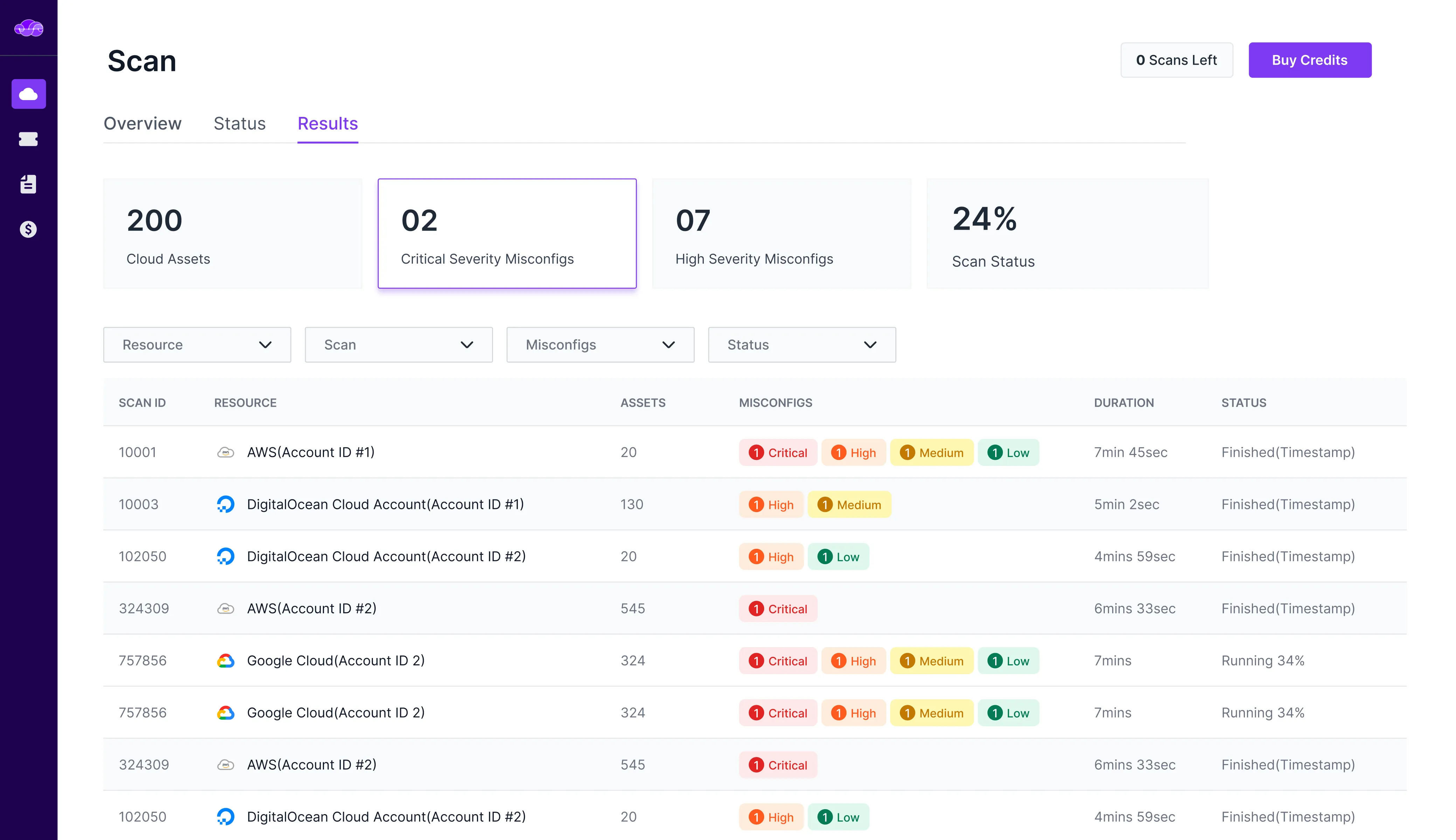
The factory's inspection line: posture checks run per account, results land in your ledger.
Agents Are a Factory, Not a Chat Feature
The teams getting real leverage from AI are not asking a chatbot for code snippets. They run agents in loops: plan a task, write the change, run the tests, open the pull request, move to the next task. Overnight. In parallel. Across code, infrastructure definitions, CI pipelines, and the tooling the agents themselves use.
That is a factory. It has throughput, work-in-progress, and defect rates. And like every factory in history, its output quality is set by its process controls — not by the skill of any individual worker, human or machine.
The hard tradeoff: the same loop that ships a feature overnight ships a misconfiguration overnight. You don't get factory throughput with workshop oversight. Either the controls move into the loop, or the loop outruns the controls.
Factory Speed Compounds Mistakes
A human team makes a security mistake and it sits in one branch until review. An agent fleet makes the same mistake and it propagates: copied into the next task as established pattern, replicated across services, baked into the templates the next loop starts from. Errors stop being incidents and start being compound interest.
The mistakes themselves aren't new — an open security group, an over-broad IAM role, a public bucket. What's new is the replication rate. Security debt used to accrue linearly with headcount. In a factory it accrues with throughput, and throughput is no longer bounded by people.
Gates Built for Human Cadence Don't Survive Machine Cadence
Traditional AppSec assumes change is expensive and slow, so it samples: a pentest per quarter, a review per release, a scan per sprint. Agentic delivery breaks both assumptions at once — change is cheap and constant, and it spans surfaces AppSec never owned: infrastructure definitions, CI tooling, the MCP servers and credentials agents operate with.
| Traditional gate | Factory control | |
|---|---|---|
| Review cadence | Quarterly pentest, sprint-end review | Every change, machine-checked |
| Scope | The application | Code, infrastructure, tooling, and the agents themselves |
| Evidence | A PDF report, weeks stale | A queryable ledger, current as of the last run |
| Failure handling | Ticket backlog, best-effort triage | Regression gate — the line stops |
| Coverage | Sampled, point-in-time | Total, continuous |
Slowing the factory down to match the gates throws away the leverage you adopted agents for. The only move that keeps both is making the gates as fast as the line.
What a Secure Factory Actually Runs On
Not a tool — a control loop. Five disciplines, applied to every change the factory makes, whether a human or an agent made it.
01 Observe
Continuous inventory of everything the factory touches — cloud accounts, clusters, identities, the tools agents call. You cannot gate what you cannot see, and agentic loops create surface faster than humans can map it.
02 Constrain
Every change declares a narrow scope up front, and everything outside it is frozen — any diff on a frozen surface fails the build. Agents are most dangerous when their blast radius is implicit.
03 Verify
Each unit of work carries a concrete exit gate: a command that passes or fails, backed by checks that produce evidence. "The agent says it's done" is not a control. A green gate is.
04 Promote
Only gated, evidenced changes move forward. The ledger records what changed, which gate it passed, and what proof exists — so promotion is an auditable event, not a merge button.
05 Regress
The full baseline reruns on every promotion. Anything that passed yesterday and fails today stops the line — because at factory speed, a silent regression ships a thousand times before a human notices.
None of this is theory to us. Kloudle's own scanning engine is built this way — frozen surfaces that fail the build on any diff, one gated task per iteration, a run ledger for every change, and a full regression baseline before anything promotes.
The Posture Engine Under the Control Loop
The loop needs a ground truth: what does the estate actually look like right now, and can you prove it? That is what Kloudle's sovereign posture engine provides.
Evidence-backed checks
1,800+ checks, each a readable SQL query against your real resource configs. Every finding carries the evidence that produced it — no black-box scoring, nothing promoted on assertion.
A ledger you own
Every scan lands in your PostgreSQL: assets, findings, pass/fail history. That is the regression baseline — diff today's posture against last week's and catch what the factory drifted.
Runs inside your constraint boundary
Sovereign deployment runs on your VMs, in your VPC. The control loop that governs your factory shouldn't route its evidence through someone else's cloud.
Agents read the same gates
MCP server and CLI expose the same findings to your AI agents that the dashboard shows your team. The factory's workers and its inspectors operate on one source of truth.
Cloud posture is the anchor, not the ceiling. Today, that live anchor is evidence-backed cloud findings in a database inside your own environment. The fuller evidence ledger and security context graph — across neoclouds, MCP servers, apps and APIs, and agent activity — is the model we are building toward on one platform, inside your network.
Put a Posture Layer in Your Factory
Self-serve signup is closing. Exclusive access opens issue gating across your MCP-connected apps — built on the 1,890 checks that run today.
Or explore Self-hosted deployment and Agent tools